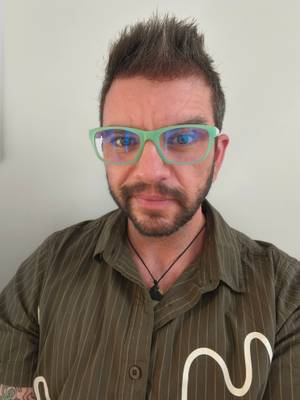
Ross Palethorpe
Counsellor
Kia ora! Kō Ross tōku ingoa.
I live in Ōtautahi. I am Pākēha and arrived in Aotearoa in 2009. My pronouns are he/him.
I am an experienced counsellor and professional development facilitator. My background is in education, with over fifteen years of experience as a secondary school teacher, and as a senior education advisor for the Ministry of Education. I moved into mental health work in 2019 and retrained as a counsellor. I am a full member of the New Zealand Association of Counsellors (#99587), EMDRNZ, and a registered ACC Sensitive Claims provider. I am accredited with Te Whatu Ora (Health New Zealand). I work full-time in private practice, and contract to the organisations listed below.
I am trained in Eye Movement Desensitization and Reprocessing (EMDR), Internal Family Systems Therapy (IFS), trauma-focused Acceptance and Commitment Therapy (TfACT), Motivational Interviewing (MI), and work within the structured trauma therapy model. My professional focus is trauma therapy, bereavement counselling, and solutions-focused brief intervention. I work with adults and adolescents (16+)
I have appeared in numerous publications discussing mental health, education, and gender.
I currently have no availability for new clients

Mihi
Tēnā koutou kua huihui mai nei
Nō Kotiana ahau
I tipu ake au ki Renfrewshire
E noho ana au ki Ōtautahi
Ko Ross tōku ingoa
Ko tēnei taku mihi ki ngā tāngata whenua o te rohe nei
Nō reira, tēnā koutou katoa
Video introduction
Modalities
I am a talk therapist and believe that building a strong relationship with the client is key to successful counselling. I am trained in a number of different counselling modalities (strategies) and regularly participate in professional learning and development. I will often work with the client to find the right approach for their needs, and use a pluralistic approach where a number of types of counselling are used together to provide the best service for the client. The main strategies I use with clients are outlined below.
Eye Movement Desensitization and Reprocessing (EMDR) is a specific treatment plan that follows a structured approach.
If you are seeking a specific type of counselling, please indicate this when contacting me.

Eye Movement Desensitization and Reprocessing (EMDR)
Eye Movement Desensitization and Reprocessing (EMDR) is a very structured form of therapy that addresses symptoms of trauma and distress. It is regarded as a highly effective form of therapy for PTSD symptoms as well as anxiety issues.
I receive regular supervision from an EMDR accredited practitioner and I am a member of EMDRAA.
For more information on EMDR, the EMDR Association of Australia has more information here

Internal Family Systems (IFS)
Internal Family Systems Therapy (IFS) allows the client to explore the various “parts” of ourselves that make up each individual. If you’ve ever wondered why you have that little voice that always reaches for chocolates when you’re stressed, or that part of you that overreacts to your boss, IFS can help you understand what those parts are trying to do and how to manage them.
I have completed professional training in IFS and Somatic Embodiment through Concinnity and receive regular supervision from an IFS accredited trainer and practitioner.
For more information on IFS from a client’s perspective, this article by Grainne Paterson is a good start

Motivational Interviewing (MI)
Motivational Interviewing (MI) is a brief intervention process to support clients to consider making changes to their lives. It helps the client to consider their motivations for change, the barriers that may be preventing this, and how to move forward with support from their community.
I have completed training in Motivational Interviewing through Wharaurau and use it regularly with clients.
Check out this resource for more information on the Motivational Interviewing process.

Acceptance and Commitment Therapy (ACT)
Acceptance and Commitment Therapy (ACT) is a type of Cognitive Behavioural Therapy that helps the client to understand how their underlying beliefs and self-talk influence their behaviours and actions. By understanding this link, clients can make strategies to support actions and behaviours that are more in line with how they want to live.
I have trained with Russ Harris in trauma-focused ACT and use it regularly with clients, and meet regularly with a supervisor who is trained in this modality.
Have a look at some more information on ACT and how it works here

Therapeutic Artwork
Whilst my main areas of practice are in talk therapy and EMDR, I also have art supplies in my office in Ōamaru for clients to use in session. You are welcome to draw, scribble, or paint in our sessions if this is valuable to you and I have a range of books and resources in my office to provide inspiration and guidance. You don’t need to ask to use these, help yourself!
Frequently Asked Questions
Counselling can seem expensive, complicated and even intimidating. Here are some of the questions I’m asked most often.
If there’s a question you’d like to ask that’s not answered here, or you’d like more information on something I’ve answered here, feel free to contact me directly.
Can you see me urgently?
Can you see me urgently?
I am not a crisis service, or able to see clients within a specified timeframe. If you need to talk to someone urgently, 1737 is a free counselling service available 24/7 by phone and text. If you are in danger please call 111 and ask for an ambulance.
I cannot guarantee that emails, texts or phone calls will be answered out of hours. In office hours I am often uncontactable as I am with clients.
Why do you not operate a waitlist?
Why do you not operate a waitlist?
I do not operate a waitlist because I feel that this is unfair for the client. I cannot always give a timeframe for when I will have availability, and if a client is on a waitlist this may prevent them from accessing support sooner with a different practitioner. If you would like to work with me and I do not have availability at that time, you are welcome to follow up with me until I have a space that suits you.
Do you work with children?
Do you work with children?
Whilst I have offered counselling to children and young people in the past, my training and professional focus is on older adolescents and adults. Counselling children, especially trauma counselling, is a specialist form of support that is out of my professional scope.
Do you see clients privately?
Do you see clients privately?
At the moment I have no availability for private clients
Why is counselling so expensive?
Why is counselling so expensive?
A great question! The cost of counselling can seem pretty high. The cost of a session includes the time spent directly with me, note-writing after the session (a legal requirement), planning for future sessions, background reading and professional development that I may need to do to provide you with the best support possible, business overheads and professional registration, and my own regular external sessions with qualified supervisors. I limit the number of clients I see in a week so that I am able to provide the best possible service to clients.
What if we’re not a good fit?
What if we’re not a good fit?
Beginning to work with a counsellor can be difficult. I offer a free 15-minute online or phone introductory session which will not include therapeutic counselling but give us the opportunity to meet and get to know each other so you can make sure I feel like the right counsellor for you. If we’re not, that’s fine! I’m happy to help you find someone else who might better meet your needs.
What if I see you in public?
What if I see you in public?
I take confidentiality very seriously, and that includes outside the practice room. I do not discuss my clients with anyone outside of supervision. If you see me in public, you are welcome to initiate contact with me but I will not disclose how I know you or initiate contact with you. If I seem offhand with you outside of our sessions, please don’t take it personally. My main aim is to maintain your privacy and keep our working relationship safe.
What are your values?
What are your values?
I am a strong believer that everyone is the expert in their own life. My role is give you the space to explore your experiences and offer a fresh perspective on things that are distressing you. I am queer, sex and body positive, neurodivergent and work on being as culturally safe as I can be. I strive to uphold Te Tiriti wherever possible and recognise the importance of society and culture on mental health and wellbeing.
What’s your accessibility policy?
What’s your accessibility policy?
I am happy to work with you to make counselling accessible, and welcome enquiries from clients on how to make sessions work for you. If you would like to bring a support person to our initial session please let me know. You are also welcome to bring a fidget toy, comfort item, or other stimming object that will help you in the session. Vaping and smoking are not permitted in my physical practice space though you are welcome to if we are working remotely. If you would like me to not engage in eye contact, or sit in a certain space, you are welcome to request this. I do not wear any strong aftershave or similar.
I am fully vaccinated, including regular boosters for Covid-19. I take RAT tests regularly and I am happy to do one on request before in person sessions. I have surgical masks and hand sanitiser available, and I am happy to wear a mask. I have a HEPA filter in the space.
If we are working remotely you are welcome to have your camera on or off, and request the same from me. If you need to move around in the session, or take a break, these can also be accommodated. I also offer text-based counselling over Signal.
I use Cliniko for remote sessions, however if you require closed captions we can use Google Meet. You are welcome to record our sessions (please let me know first!), take notes, or whatever else will help you get the most out of our work together.
Client Safety and Professional Vetting
Client Safety and Professional Vetting
I am a member of the New Zealand Association of Counsellors, and follow the NZAC Code of Ethics, which prioritises client safety and confidentiality. I keep all client notes offline, and in a locked cabinet that only I have access to.
My practice space is secluded and private, in a building with other practitioners. There is a waiting room for clients.
For remote video clients, I use Cliniko as this offers a secure connection and a range of accessibility options. For text-based clients I use Signal, which is encrypted.
I am police vetted and carry professional indemnity insurance.
Do you see clients in the evenings/weekends?
Do you see clients in the evenings/weekends?
The majority of my work is done between 9 and 3pm. I am unable to offer sessions to clients outside of these times.
What kind of counselling do you do?
What kind of counselling do you do?
I am a Rogerian therapist, which means that I follow person-centered and collaborative models of counselling. I believe that the counselling relationship is the most important factor in therapy.
I am trained in EMDR, Internal Family Systems Therapy, trauma-focused Acceptance and Commitment Therapy (ACT), Motivational Interviewing, and structured trauma therapy.
What if I can’t make a session?
What if I can’t make a session?
If you’re sick or isolating, you’re welcome to request we move our session online. If you’re unable to make your appointment then please give me as much notice as you can. If you’re finding that you’re reluctant to come along, let me know how you’re feeling and we’ll work on a solution together.
Can I follow you on Twitter/Instagram/Facebook etc?
Can I follow you on Twitter/Instagram/Facebook etc?
I am not on social media in a professional capacity. If you find me on social media please respect that this is outside of the counselling environment. I do not follow clients on any social media
What’s your policy on payment?
What’s your policy on payment?
For private clients, I invoice after the session through HNRY. You must pay for the previous session before your next one. If you’re in difficulty around payment, let me know sooner rather than later and we can work something out! Please let me know if you are invoicing to another organisation at the time of booking.
If you do not show up for an appointment or cancel without a valid reason within 24 hours,you will be charged for the session at my discretion.
How do you keep yourself professionally safe?
How do you keep yourself professionally safe?
Counselling is an intense profession and I make sure to balance my contact work with clients with other activities and interests. I limit the number of clients I see so that I can give each my full attention.
I receive regular professional supervision, which offers advice and guidance on how to improve my practice. Any cases discussed within supervision do not involve identifying details.
I regularly take part in professional learning and development to strengthen my practice.
What training and qualifications do you have?
What training and qualifications do you have?
Eye Movement Desensitization and Reprocessing (EMDR) 2025
Internal Family Systems Therapy and Somatic Embodiment (12-week course) 2025
Te Whatu Ora Accredication 2024
Full membership of the New Zealand Association of Counsellors 2024
Trauma-Informed ACT course (6 week course) 2024
Motivational Interviewing (3 day course) 2024
Provisional member New Zealand Association of Counsellors 2022
Bachelor in Applied Counselling - Manukau Institute of Technology 2022
Professional training in disputes resolution and peer supervision - Ministry of Education 2018
Postgraduate Certificate in Digital and Collaborative Learning - Mindlab/Unitec 2015
Postgraduate Certificate in Secondary Education- University of London 2006
Bachelors in Marine and Freshwater Biology- University of Glasgow 2004
What if I want to stop seeing you?
What if I want to stop seeing you?
The client-counsellor relationship is the most important factor in counselling being successful. If for any reason you feel like we have finished our work together, or that it’s no longer working for you, you are welcome to end our sessions.
If there’s something that doesn’t feel right that you want to work out with me, then it can be a really useful exercise to work through any conflict together.
Contact
Email address: rosspcounselling@gmail.com
If inquiring as a new client, please include your location, if you’d prefer online or in-person support, and what funding avenue you would like to be referred through.
I am not a crisis or urgent response service and may not be able to respond to any inquiries immediately. If you are in crisis please call 111. If you need to talk to someone urgently, call or text 1737 for free, confidential support 24/7.